
Pre-Workout vs Energy Drinks: Which Wins for Training
By Jon Klipstein, U.S. Army Combat Veteran & Founder of Die Tryin Co.
Science reviewed by Onur Oncer, BS Physiology (Phi Beta Kappa) and peer-reviewed published researcher.
ENERGY DRINKS WAKE YOU UP. PRE-WORKOUT MAKES YOU PERFORM.
It's the question every lifter asks at some point: I've got a can of Monster in the fridge — why not just crack one open before the gym? It's cheaper, it tastes good, and the caffeine hit is real.
Here's the truth: energy drinks and pre-workouts share exactly one ingredient (caffeine) and almost nothing else. One is designed to keep you alert at a desk. The other is engineered to move heavier weight, push more reps, and recover faster. If you're chasing actual performance, the comparison isn't close.
This is the breakdown of what's actually in each, what the research says, and when each one is the right call.
WHAT'S ACTUALLY IN AN ENERGY DRINK
Energy drinks are formulated for general alertness, not training. The ingredient list is short:
- Caffeine — typically 80–300mg per can; blocks adenosine to reduce perceived fatigue
- Sugar — usually 25–55g per can in non-diet versions; fast carb hit followed by a crash
- Taurine — included in tiny doses (~1g per can vs. 4–6g for any actual benefit)
- B-vitamins — megadosed for marketing, not because you're deficient
- "Energy blends" — proprietary mixes that hide underdosing of ginseng, guarana, ginkgo, and other low-evidence ingredients
What you don't get: anything that improves muscle endurance, blood flow, power output, or recovery. The category isn't designed for it.
WHAT'S ACTUALLY IN A QUALITY PRE-WORKOUT
Pre-workout supplements are formulated specifically for athletes. The ingredients are selected because research shows performance benefits at clinical doses:
- L-Citrulline (6–8g) — increases nitric oxide, improves blood flow to muscle, boosts high-rep performance and recovery
- Beta-Alanine (3.2g) — buffers lactic acid in muscle, extends time-to-failure in 60–240 second efforts
- Betaine Anhydrous (2.5g) — modest but real power output gains in trained lifters
- L-Tyrosine (1.5–3g) — supports dopamine and norepinephrine under physical stress; sharper focus during heavy sets
- Creatine Monohydrate — the single most-researched performance ingredient ever; strength, power, lean mass
- Caffeine (typically 200–300mg) — performance dose, not jitters dose; often stacked with extended-release versions for sustained energy
- Nootropics — Alpha-GPC, CognatiQ®, theanine for mind-muscle connection and focus without crash
Every ingredient on that list has dose-response data behind it. The International Society of Sports Nutrition's caffeine position stand alone recommends 3–6mg/kg of bodyweight for ergogenic benefit (Guest et al., 2021) — and that's only one ingredient out of 6+ in a quality formula.
FOUR REASONS PRE-WORKOUT BEATS ENERGY DRINKS
1. Performance ingredients vs. empty stimulants
Energy drinks give you caffeine and maybe sugar. Pre-workouts give you ergogenic aids — ingredients with peer-reviewed data showing improved strength, endurance, power, and recovery. Caffeine alone improves perceived exertion; the full pre-workout stack improves output.
2. Pump, blood flow, and nutrient delivery
Energy drinks do nothing for blood flow. Pre-workouts use vasodilators like L-Citrulline and Nitrosigine® (and trademarked ingredients like VasoDrive-AP®) to open blood vessels and push nutrients into working muscle. That's where the pump comes from, and it's where high-rep performance improves. See our VasoDrive-AP breakdown for the deeper science.
3. Endurance and lactic acid buffering
Beta-alanine in a properly dosed pre-workout (3.2g) raises muscle carnosine levels over 4–6 weeks of use. Higher carnosine = better lactic acid buffering = more reps before failure. Energy drinks don't include this. The "tingles" people feel from beta-alanine are paresthesia — harmless and a sign the dose is real.
4. Formulation transparency
Many energy drinks (and cheap pre-workouts) hide underdosed ingredients inside proprietary blends labeled with one total weight. A 2019 industry analysis found this practice is widespread (Jagim et al., 2019). Die Tryin Co. publishes every dose on every label — no blends, no hiding.
WHEN AN ENERGY DRINK IS ACTUALLY FINE
Energy drinks aren't useless — they just aren't for training. They work fine for:
- Long drives or shift work
- Studying or office push-throughs
- A quick caffeine hit on a rest day
- Casual gym sessions where performance isn't the goal
For anything where output matters — heavy lifts, conditioning, sport practice, racing, hybrid training — pre-workout is the right tool. The reps you'll do, the weight you'll move, the time-to-failure you'll buy: those measurable wins only come from the full ingredient stack.
YOUR PRE-WORKOUT CHECKLIST
Real performance, no marketing nonsense. Look for these on the label:
- L-Citrulline — 6–8g (not citrulline malate at 1–2g)
- Beta-Alanine — 3.2g
- Betaine Anhydrous — 2.5g
- L-Tyrosine — 1.5–3g
- Caffeine — 200–300mg per scoop; bonus if blended with extended-release caffeine (zumXR®)
- Trademarked ingredients used at studied doses — Nitrosigine®, VasoDrive-AP®, ElevATP®, CognatiQ®, KSM-66®
- No proprietary blends — every ingredient broken out at its exact dose
- Third-party testing — Certificate of Analysis + banned-substance testing if you're an athlete or military
Anything that falls short of those numbers is selling you marketing, not performance. See our full buyer's guide on choosing a pre-workout for the deep dive on each ingredient.
FREQUENTLY ASKED QUESTIONS
Can I take a pre-workout and an energy drink together?
You can, but you probably shouldn't — you'll easily blow past 500mg of caffeine in 20 minutes. That's the territory where jitters, anxiety, elevated heart rate, and GI distress show up. Pick one or the other.
What about sugar-free energy drinks? Are those better for training?
Slightly — you avoid the sugar crash. But you're still just getting caffeine + token taurine. The other 6–7 ingredients that make a pre-workout effective aren't in the can. For training, it's still not the right tool.
Is pre-workout safe to take every day if I'm training daily?
For healthy adults at clinical doses, yes. The main concern is caffeine tolerance, which is a sensitivity issue, not a safety one. Cycle off every 6–8 weeks for 1–2 weeks to reset. Full safety breakdown in our is pre-workout bad for you deep dive.
How much caffeine should a pre-workout have?
200–300mg per serving hits the ergogenic sweet spot for most people. The performance benefit of caffeine plateaus around 3–6mg/kg bodyweight (Examine.com) — for a 180 lb (82 kg) lifter, that's 245–490mg. Anything over 400mg per scoop is marketing.
Will an energy drink kick me out of ketosis?
Sugar-loaded ones definitely — 25–55g of carbs in one can. Sugar-free versions (Bang, Zero Sugar Monster, etc.) won't. Sugar-free pre-workouts also won't kick you out of ketosis.
Why is L-Citrulline better than citrulline malate?
Citrulline malate is half citrulline, half malic acid. To hit the 6–8g of citrulline used in performance studies, you'd need 12–16g of citrulline malate. Most products use 1–2g of citrulline malate, which works out to under 1g of actual citrulline — well below the dose that does anything. Pure L-Citrulline at clinical doses is the only version that hits the research target.
READY TO GEAR UP?
If you're chasing real performance, the comparison is settled. Die Tryin Co.'s pre-workouts are clinically dosed, transparently labeled, third-party tested — veteran-built, no proprietary blends, no marketing fluff. Take the quiz and we'll match you to the right one for your training.
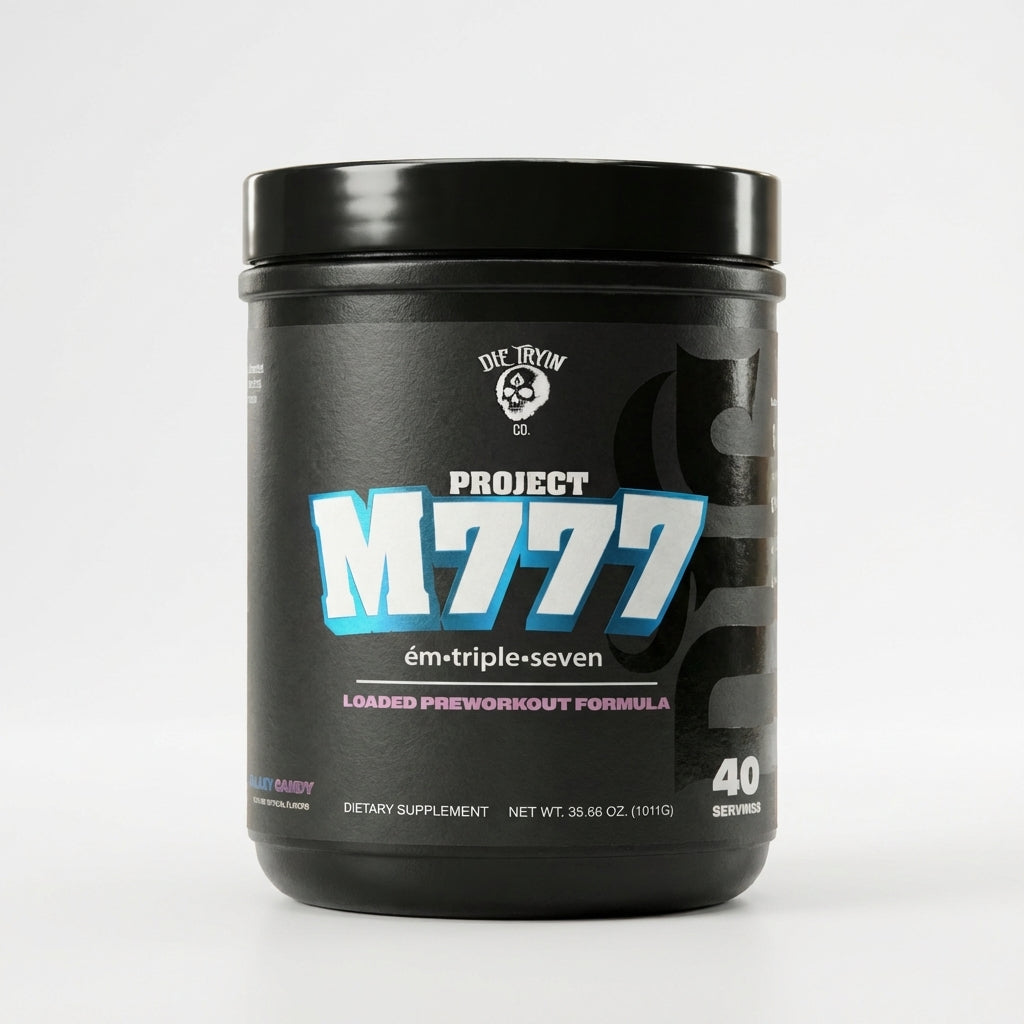
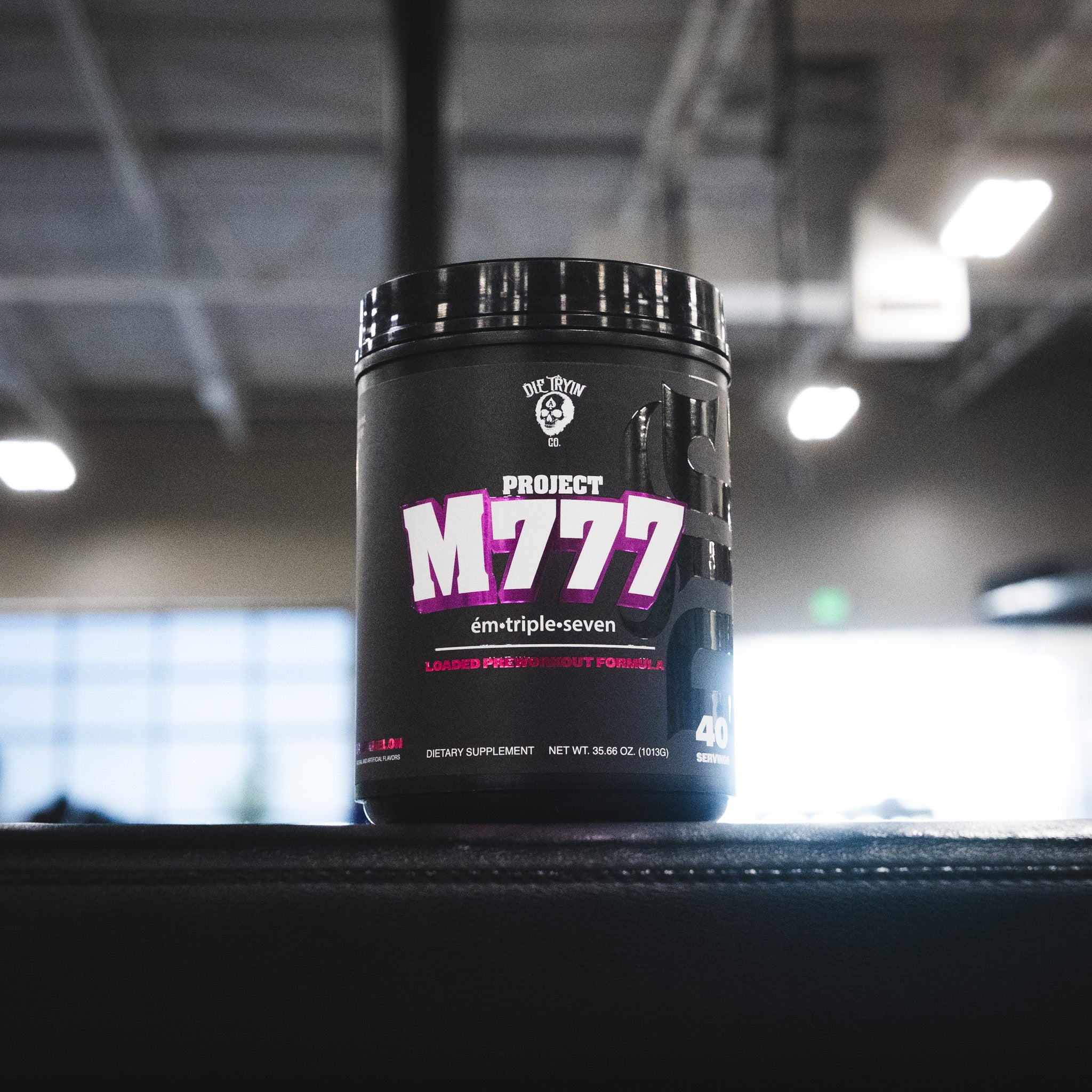
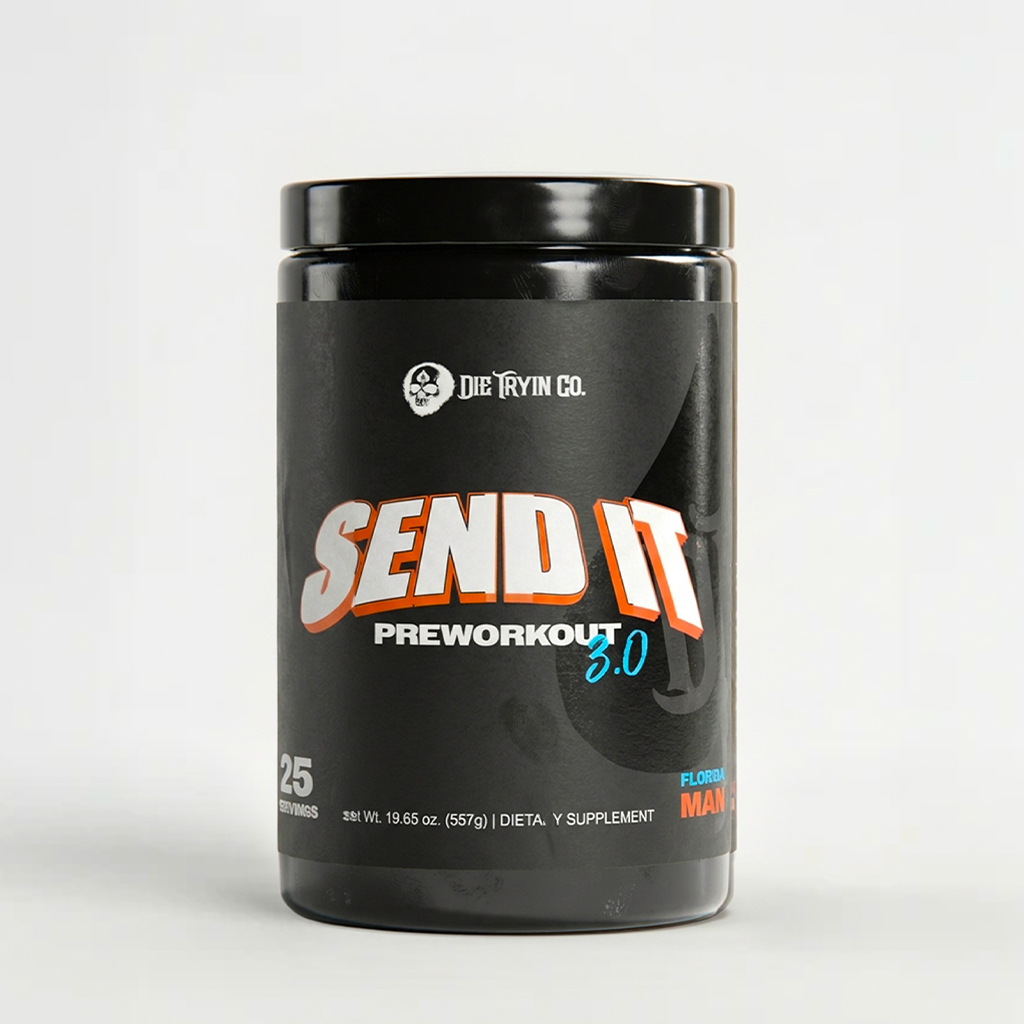
Want to go deeper? Start with our complete guide to pre-workout supplements, then check how to choose the best pre-workout, is pre-workout bad for you, the 4 best pre-workout ingredients, or our VasoDrive-AP pump breakdown. Pick the formula that fits: SEND IT 3.0 (daily driver), Project M777 (maximum stim), Red Dot (focus-forward), or Pump Action (pump-focused, low stim).
ALWAYS FORWARD.
Read more
How collagen works in your body When you drink a scoop of collagen, it breaks down into tiny peptide fragments that show up in your bloodstream within 1–2 hours. Your body then uses those fragments...
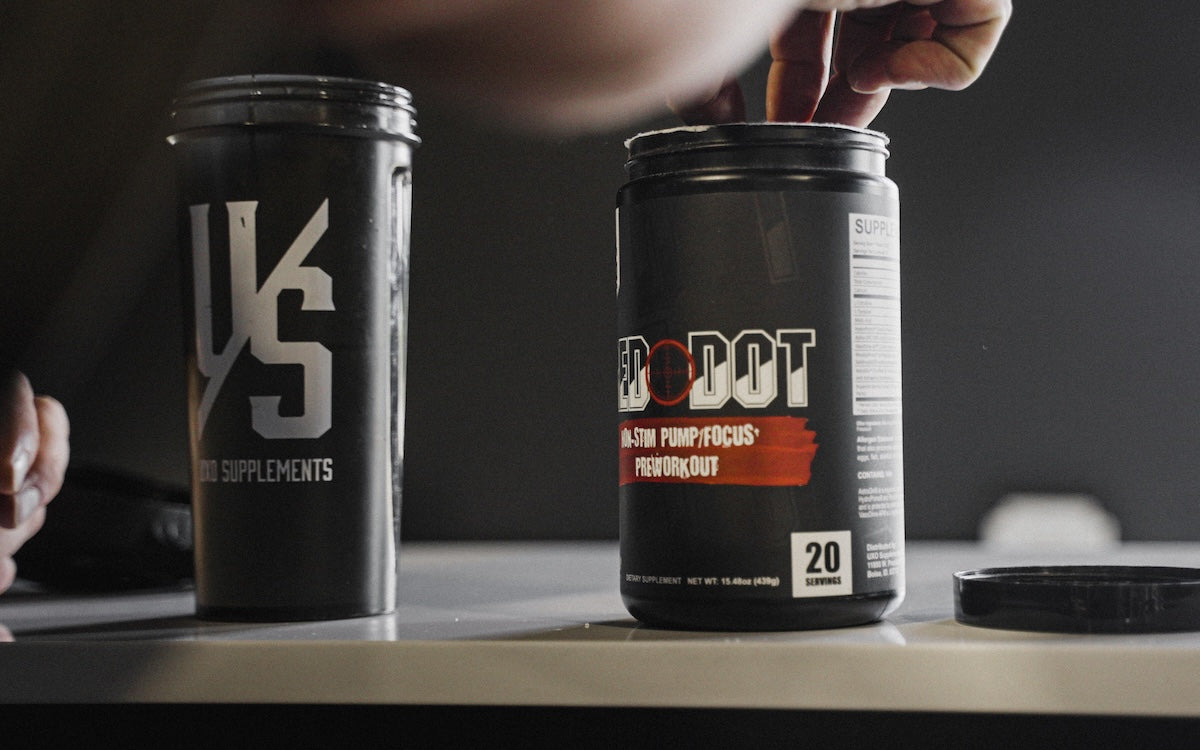
Red Dot is the stim-free pre-workout for serious training — 9g citrulline, 4g tyrosine, VasoDrive-AP, glycerol. Skin-splitting pumps and razor focus without caffeine.
The essentials
Share details of your store's product selection, or share a story that speaks to your customers.